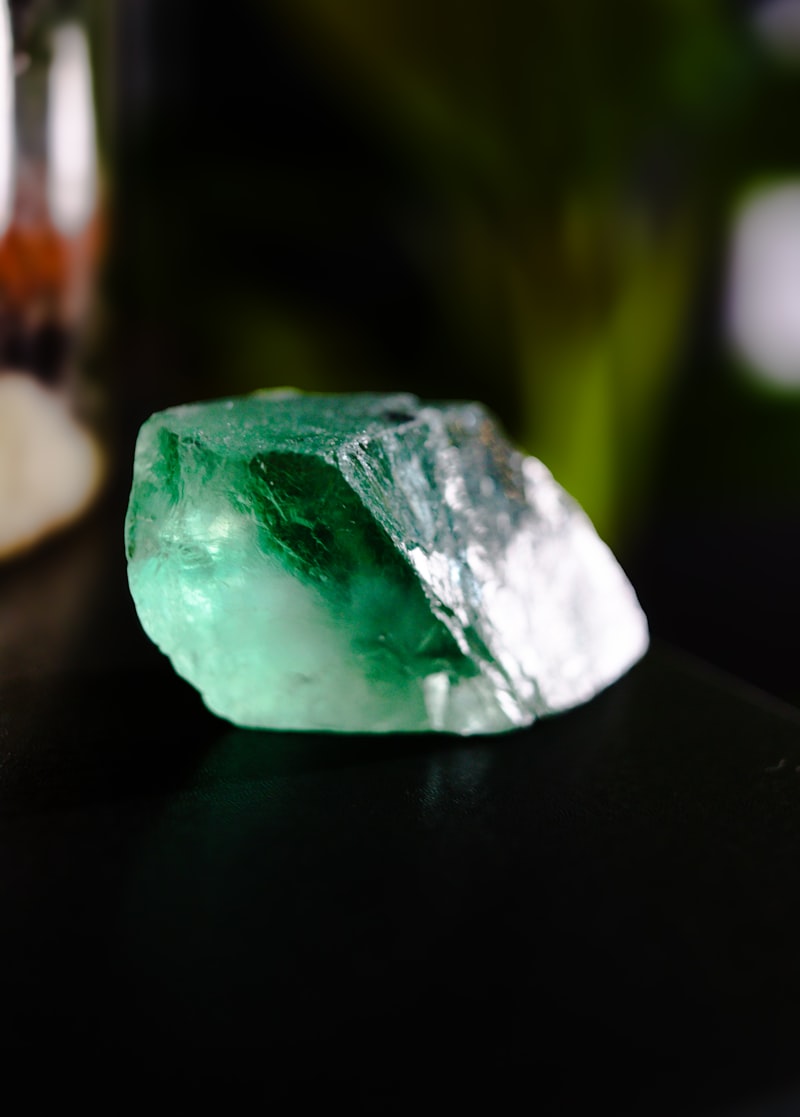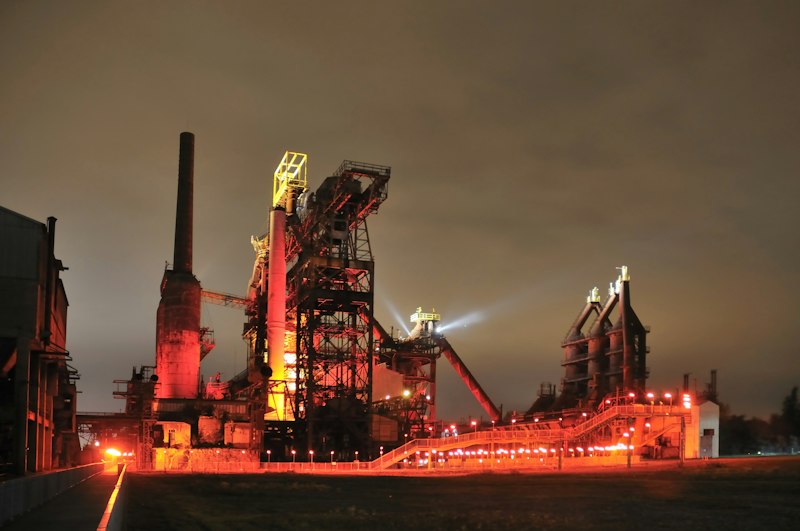
Whether a fluorspar cargo lands at the buyer's facility as acid-grade (CaF₂ ≥ 97% — HF acid plant feed) or metallurgical-grade (CaF₂ 60–85% — steel flux) depends almost entirely on how it was processed. Run-of-mine fluorite ore is typically 30–60% CaF₂, contaminated with silica, calcite, barite, and sulphide minerals. Every percentage point of CaF₂ uplift and every reduction in penalty impurity is the product of an engineered beneficiation step. This is the five-stage walk-through that procurement teams and operating engineers should understand before evaluating any fluorspar supplier's process flow.
Step 1: Mining and Run-of-Mine Ore Generation
Fluorite occurs in hydrothermal vein, replacement, and stratiform deposits. Open-pit mining suits near-surface vein and replacement bodies; underground mining handles deeper or steeper vein structures. Bare Syndicate's Kandahar operation works a vein-replacement deposit with disclosed reserves up to 8.8 Mt. Run-of-mine ore typically contains 30–60% CaF₂ with the gangue mix depending on host rock — quartz/silica in vein-type deposits, calcite (CaCO₃) in carbonate-replacement deposits, barite where fluorspar coexists with sulphate mineralisation. Careful blast design and selective extraction at the working face reduce dilution and improve downstream recovery.
Step 2: Crushing and Grinding to Liberation Size
Crushing reduces mined ore to flotation-feed particle size in stages: primary jaw crusher (typically Sandvik or Metso designs, 1,500×3,000 mm class for a 200 TPD operation) reduces 0–300 mm run-of-mine to 0–80 mm; secondary cone crusher takes it to 0–25 mm; ball mill or rod mill grinds to 50–200 μm (microns) depending on the fluorite grain liberation in the host rock. Target P80 (80% passing size) sits at 100–150 μm for most operations. Over-grinding wastes energy and creates flotation problems with ultra-fines; under-grinding leaves locked CaF₂ unliberated and lowers recovery.
Step 3: Froth Flotation — The Grade-Determining Step
Flotation is where 40% CaF₂ feed becomes 70–97% CaF₂ concentrate. The reagent suite typically includes:
- Collector: fatty acids (oleic acid, tall oil) and their modifications. Reagent dose 200–600 g/t of ore.
- Depressant: sodium silicate (for silica gangue), quebracho or modified starch (for carbonate gangue).
- pH modifier: typically alkaline range (pH 8–10).
Multi-stage flotation circuits — roughing, scavenging, multiple cleaning stages — progressively upgrade the concentrate. Acid-grade (≥ 97% CaF₂) typically requires 5–7 cleaning stages with intermediate regrinding to liberate remaining locked particles. Metspar (60–85%) requires fewer stages. Flotation recovery (mass of CaF₂ in concentrate ÷ mass in feed) varies 70–90% depending on ore type and operator skill.
Step 4: Dewatering and Drying
Flotation concentrate from the cleaner output is typically 25–35% solids. Thickeners (Outotec or FLSmidth gravity thickeners typical) raise to 50–60% solids; vacuum filters or pressure filters take to 8–12% moisture. For metallurgical and cement grades, this moisture is acceptable. For acid-grade, thermal drying (rotary or fluid-bed dryer) takes moisture to 0.1–0.5%. Acid-grade buyers contractually require <0.1% moisture for the HF reaction stoichiometry; any free water dilutes sulphuric acid and disrupts the HF plant.
Step 5: Quality Control, Grading, and Packing
Final concentrate is sampled per ISO 12743 or equivalent representative-sampling protocol. Assay covers CaF₂ (via XRF or ICP-OES titration per AOCS / ASTM methods), SiO₂, CaCO₃, sulphur (penalty for HF feed), phosphorus (penalty for premium battery-grade), arsenic (penalty), moisture, and particle-size distribution. Products grade out as: acid-grade (≥ 97% CaF₂), ceramic-grade (85–95%), metallurgical-grade (60–85% with "effective" CaF₂ calculation: effective = CaF₂ − 2.5 × SiO₂), or cement-grade (35–60%). Packing: jumbo bags (1 MT typical) for acid-grade and small-volume buyers; bulk for metspar shipments to large steelmakers.
Where Fluorite-Processing Claims Don't Hold
- Stating "fluorspar processing" as if there is one process. Acid-grade and metspar production are different processing flowsheets, not different points on one flowsheet.
- Claiming Pakistani / Afghan production matches Mexican or Mongolian on consistency without naming the specific operation. Plant-level recovery and grade consistency vary widely; check the operator-specific track record.
- Equating flotation recovery with concentrate grade. A high-recovery operation can still produce low-grade concentrate; the trade-off is operator choice.
- Assuming acid-grade and ceramic-grade trade at the same price. Acid-grade premium grades (97.5%+ with As < 5 ppm, P < 100 ppm for battery-electrolyte feed) trade at $80–300/t over standard acid-grade (premium structure as of 2026-04-14, source: Fastmarkets IM acidspar assessments).
- Omitting moisture cap from acid-grade contracts. Acid-grade HF feed contractually requires < 0.1% moisture; cargoes outside this cap are rejected at the HF plant.
- Stating "any flotation plant produces acid-grade." Multi-stage cleaning, intermediate regrinding, and high-spec reagent control are the operational requirements; not every fluorspar plant achieves them.
What This Means for Procurement Diligence
Asking a fluorspar supplier "what's your CaF₂ %?" gets you a number. Asking "what's your flowsheet, how many cleaning stages, what's your recovery vs spec trade-off, what's the dryer moisture cap?" gets you the operational reality. Bare Syndicate's Kandahar operation runs heavy-media separation plus multi-stage froth flotation with thermal drying, sized at 200 TPD with full assay-pack delivery on every cargo.
Next step: Discuss fluorspar process specifications with Bare Syndicate's Kandahar acid-grade operation — 97%, 97.5%+ with As < 5 ppm, and 98%+ with P < 100 ppm grades available with flotation flowsheet documentation.
Additional Market Context
The USGS Mineral Commodity Summaries fluorspar chapter, British Geological Survey World Mineral Production fluorspar table, and Fastmarkets IM acidspar and metspar assessments are the foundational data sources. The IEA Critical Minerals Outlook covers fluorspar's role in the battery-electrolyte chain. The Kigali Amendment to the Montreal Protocol (in force 2019) governs HFC phase-down with HFO replacement maintaining HF demand. The EU Critical Raw Materials Act (Regulation 2024/1252) lists fluorspar as a strategic raw material.
For acid-grade fluorspar buyers specifically, the HF producer roster (Honeywell, Orbia, Solvay, Daikin, Arkema, Do-Fluoride, Sanmei) and LiPF₆ producer roster (Tinci, Capchem, Stella Chemifa, Morita Chemical) define the downstream demand picture.
Last reviewed: 2026-05-16. Process parameters and reagent ranges are industry-standard references; specific operations vary based on ore type, plant design, and target product mix.