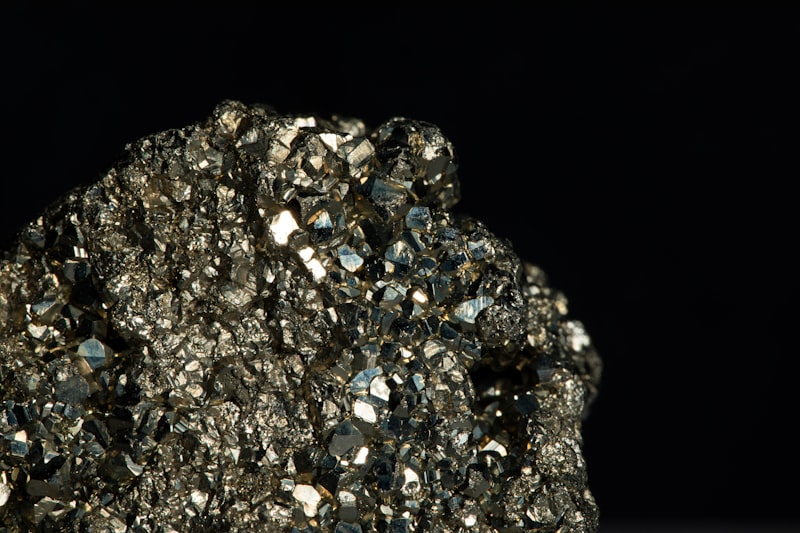
Iron Pyrite (FeS₂)
Origin: Khyber Pakhtunkhwa & Balochistan deposits
FeS₂, S 50–53% | Sulfuric acid feedstock, pellet binder, mineral pigment
Available grades & specifications+
Pyrite Lump (S 50%+)
FeS₂, S ≥ 50%, Fe ≥ 45%, lump 10–50 mm
Acid plant roasting feed
Pyrite Fines (S 50%+)
FeS₂, S ≥ 50%, fines <10 mm
Pellet binder, downstream chemistry
Grade comparison +
| Property | Pyrite Lump (S 50%+) | Pyrite Fines (S 50%+) |
|---|---|---|
| Composition | FeS₂, S ≥ 50%, Fe ≥ 45% | FeS₂, S ≥ 50%, Fe ≥ 45% |
| Form | Lump 10–50 mm | Fines <10 mm |
| Primary Use | Acid plant roasting feed | Pellet binder, downstream chemistry |
| Packaging | 25 MT bulk containers | 1 t jumbo bags |
Origin & supply chain +
Sourced from Khyber Pakhtunkhwa & Balochistan Deposits
Bare Syndicate trades Pakistani iron pyrite as a regional alternative to Claus-recovered sulfur for sulfuric acid manufacture. The mineral occurs across Khyber Pakhtunkhwa and Balochistan host horizons, often as a by-product of coal and base-metal mining. Material is screened for arsenic content (critical for acid plant catalyst life) and sized to lump or fines as required. The roasted residue (Fe₂O₃, ~85%+) finds secondary use as a pellet binder and iron-sulfate / mineral-pigment feedstock.
FAQ +
Why is iron pyrite classified separately from iron ore?
Iron pyrite (FeS₂) is iron disulfide — chemically and commercially distinct from iron oxide ores. Its primary commercial value is the sulfur content (~53.5% S by mass) used for sulfuric acid manufacture, not the iron content (~46.5% Fe). The HS classification reflects this: pyrites are HS 260120 (roasted) and HS 260140 (un-roasted), separate from iron ore HS 260111 and 260112. Buyers searching for steelmaking iron ore should reference the [iron-ore](/products/iron-ore) page instead.
How does pyrite feed sulfuric acid manufacture?
Pyrite is roasted in fluid-bed roasters at 800–950 °C, converting FeS₂ + O₂ → Fe₂O₃ + SO₂. The SO₂ gas is then catalytically oxidized over V₂O₅ catalyst to SO₃, which is absorbed in water to produce H₂SO₄. About 5–10% of global sulfuric acid is still made via this pyrite-roasting route — particularly relevant for regional acid plants without sour-gas access. The roasted residue (Fe₂O₃) is a low-grade iron oxide useful as pellet binder or pigment feedstock.
Where is your pyrite sourced from?
Khyber Pakhtunkhwa and Balochistan host pyrite-bearing horizons across the catalogue. Bare Syndicate's pyrite shipments come from KP and Balochistan licensed deposits, with independent assays for S content, Fe content, and trace contaminants (As, Pb, Hg) before container loading. The arsenic content matters: acid plants typically reject feed with As > 100 ppm due to V₂O₅ catalyst poisoning.
What's typical export packaging?
Pyrite ships in 25 MT bulk containers FOB Karachi (lump) or in 1 t jumbo bags (fines). Independent assays for S, Fe, and contaminants accompany every cargo. Lead time 4–6 weeks from confirmed PO.