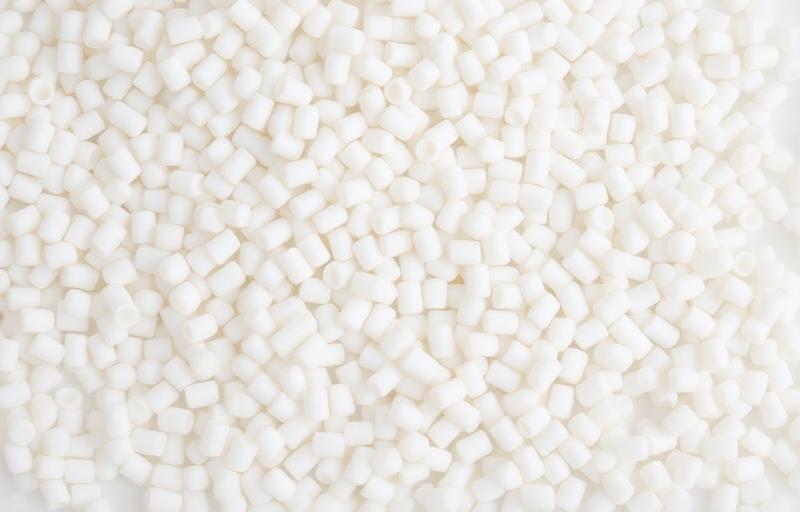
Polypropylene
Origin: International Sourcing
Homopolymer & Copolymer
Available grades & specifications+
Homopolymer
MFI: 3–12 g/10min
Automotive, Packaging
Random Copolymer
MFI: 8–15 g/10min
Medical, Food containers
Grade comparison +
| Property | Homopolymer | Random Copolymer |
|---|---|---|
| MFI (g/10min) | 3–12 | 8–15 |
| Melting Point | 160–165°C | 140–150°C |
| Flexural Modulus | 1,300–1,800 MPa | 800–1,200 MPa |
| Clarity | Opaque | Translucent/Clear |
| Impact Strength | Standard | Enhanced (low temp) |
| Primary Use | Automotive, Packaging, Raffia | Medical, Food Containers, Films |
Origin & supply chain +
Diversified International Sourcing
Bare Syndicate sources polypropylene from diversified international producers across the Middle East, Southeast Asia, and South Korea, ensuring supply continuity and competitive pricing across homopolymer and copolymer grades for manufacturing buyers in both emerging and developed markets. Our supply network includes world-scale production facilities that utilize advanced catalyst technologies to produce resins with consistent quality and narrow MFI distributions. We offer complete technical support including grade selection guidance, processing parameter recommendations, and regulatory compliance documentation for food-contact, automotive, and medical applications. Logistics are managed through established trade corridors with container and bulk options, supported by warehousing facilities at key distribution hubs.
FAQ +
What is polypropylene used for?
Polypropylene is the second most widely produced plastic globally. It's used in automotive parts (bumpers, dashboards), packaging (food containers, bottle caps), textiles (non-woven fabrics, carpets), medical devices (syringes, surgical trays), and consumer goods (furniture, toys).
What is the difference between homopolymer and copolymer polypropylene?
Homopolymer PP is stiffer, stronger, and has a higher melting point — ideal for automotive parts, structural packaging, and industrial containers. Random copolymer PP is more transparent, flexible, and has better impact resistance at low temperatures — preferred for medical devices, food containers, and clear packaging applications.
Why is polypropylene preferred for food packaging?
PP offers excellent chemical resistance, high melting point (160°C), low moisture absorption, and FDA/EU food-contact approval. It's microwave-safe, dishwasher-safe, and doesn't leach harmful chemicals — making it the material of choice for food storage containers, yogurt cups, and ready-meal trays.
What is the role of polypropylene in the automotive industry?
PP accounts for approximately 30–40% of all plastics used in modern vehicles. It's used for bumpers, interior trim panels, battery casings, air ducts, and under-hood components. Mineral-filled PP compounds offer enhanced stiffness and heat resistance for demanding automotive applications. Growing EV production is further increasing PP demand.
What MFI ranges does Bare Syndicate offer?
We supply homopolymer PP in MFI ranges from 3–12 g/10min (general injection and raffia applications) and random copolymer PP in MFI ranges from 8–15 g/10min (clear packaging and medical applications). Specific grades can be sourced to match buyer processing requirements.