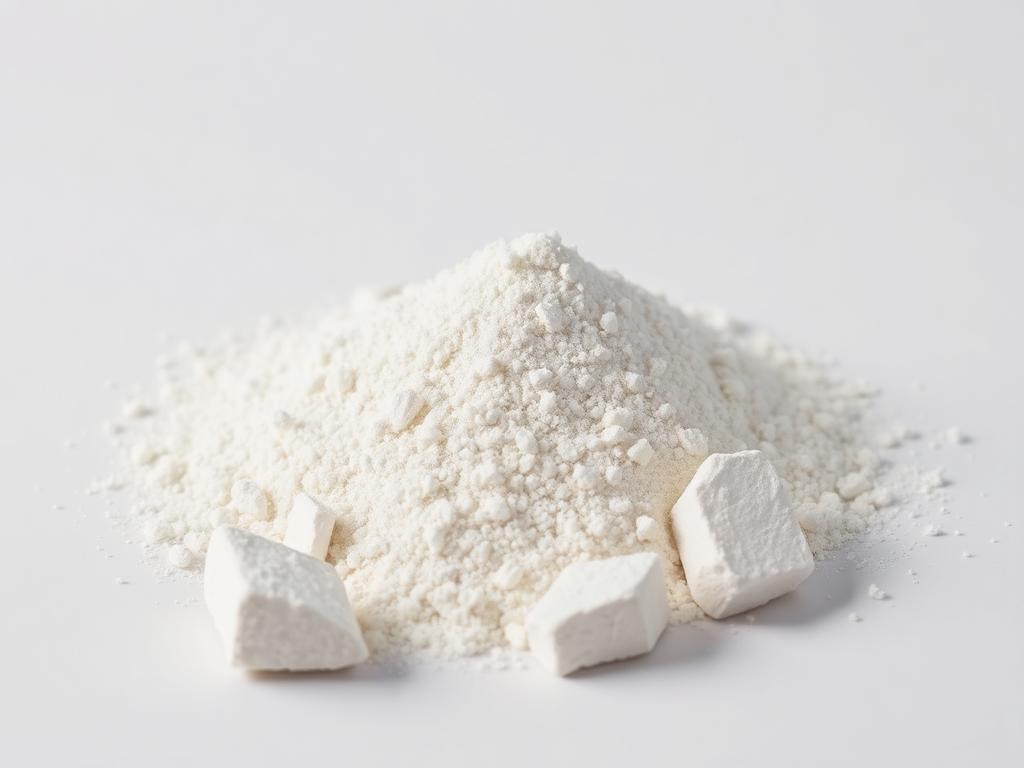
Talc
Origin: Pakistan & Afghanistan
Industrial filler grades | Paint, Plastics, Cosmetics, Ceramics
Available grades & specifications+
Industrial Lumps (90%+ Whiteness)
Whiteness: 90%+, lumps 0–100 mm
Grinding plants, Ceramic body
Micronized Powder 325 Mesh
Whiteness: 92%+, asbestos-free, 325 mesh
Paint fillers, Plastic compounding
Cosmetic / Pharma Grade
Whiteness: 95%+, USP/BP grade, asbestos-free certified
Cosmetics, Pharmaceutical excipient
Grade comparison +
| Property | Industrial Lumps (90%+ Whiteness) | Micronized Powder 325 Mesh | Cosmetic / Pharma Grade |
|---|---|---|---|
| Whiteness | 90%+ | 92%+ | 95%+ |
| Particle Size | 0–100 mm lump | 325 mesh (<45 µm) | USP/BP fineness |
| Asbestos Status | Tested on request | Asbestos-free | Certified asbestos-free (USP <659>) |
| Standard | Mine-run | Industrial / Paint grade | USP / BP / EP |
| Packaging | 25 MT bulk containers | 25 kg bags, palletized | 25 kg bags, sealed liners |
| Primary Use | Grinding plants, Ceramics | Paint fillers, Plastic compounding | Cosmetics, Pharmaceutical excipient |
Origin & supply chain +
Sourced from Pakistan & Afghanistan
Bare Syndicate's talc supply is anchored in two geological provinces: the metamorphosed dolomitic horizons of Pakistan's Mohmand and Gilgit-Baltistan districts, and the talc-magnesite bodies of Afghanistan's Eastern Hindu Kush. We work directly with mine operators to selectively hand-cob and sort high-whiteness lumps at the pit, before road transport to our Karachi processing facility. Industrial lumps are offered as mine-run; micronized 325-mesh and USP/BP cosmetic grades are produced through dedicated grinding lines with ceramic-lined classifiers to avoid iron contamination. Every cosmetic-grade lot is independently tested by SGS or Bureau Veritas for asbestos (per USP <659>) and heavy metals before container loading, with full documentation issued for FDA and EU Cosmetics import compliance.
FAQ +
What is talc used for?
Talc (hydrated magnesium silicate) is a high-value industrial filler and functional additive in paints & coatings, plastics & polymers, paper, ceramics, cosmetics, and pharmaceuticals. Its lamellar structure provides reinforcement, opacity, slip, and barrier properties depending on grind and whiteness.
How are talc grades differentiated?
Primarily by whiteness (90–98%), particle-size distribution (mesh / D50), and purity (low Fe, asbestos-free certification). Industrial lumps go to grinding plants, micronized 325-mesh powders serve paint and plastic compounding, and USP/BP-grade cosmetic talc requires 95%+ whiteness with mandatory asbestos-free certification.
Is your talc asbestos-free?
Yes. All cosmetic and pharmaceutical-grade talc shipments carry independent asbestos-free certification per USP <659> and EU Cosmetics Regulation 1223/2009 standards. Industrial micronized grades for plastics and paint are also tested batch-by-batch on request.
What are typical export packaging and Incoterms?
Lumps ship in 25 MT bulk containers FOB Karachi. Micronized and cosmetic grades ship in 25 kg paper bags palletized inside 20-foot containers, FOB Karachi or CIF destination port. Lead time is 3–4 weeks from confirmed PO.
Where is your talc sourced from?
From premium deposits in the Mohmand and Gilgit-Baltistan regions of Pakistan and the Eastern Hindu Kush of Afghanistan — both regions known for high-whiteness, low-iron talc bodies suitable for cosmetic and pharmaceutical end-uses.