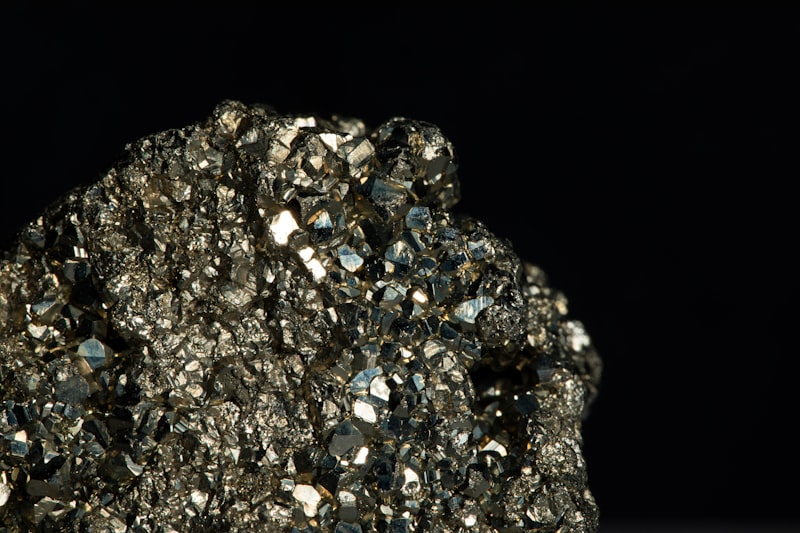
Pakistan, Afghanistan, Myanmar, Bolivia, and several African nations hold lead-zinc sulphide deposits that don't appear on global producer maps because they sit at exploration or early-development stage. Whether they contribute to global supply through 2030 depends less on geology — the deposits exist — and more on infrastructure, financing, and counterparty alignment. The procurement question for buyers and the investment question for sponsors converge: what makes a developing-country lead-zinc project bankable, and which projects clear that bar?
Resource Map: Where the Deposits Actually Are
Pakistan's Balochistan province hosts the Duddar zinc-lead deposit (developed since the 2000s by Pakistan-China joint ventures with Chinese ENFI as technical lead) along the Lasbela-Khuzdar belt. The deposit is medium-sized by global standards — sulphide mineralisation suitable for differential flotation. Other Pakistani occurrences extend through the Las Bela, Khuzdar, and Surmai districts. Afghan Bamyan and Logar provinces host polymetallic occurrences; the Hajigak iron-and-base-metal complex includes meaningful zinc-lead potential. African projects in the DRC, Namibia (Skorpion legacy district), and Burkina Faso are in various exploration stages.
Infrastructure: The Largest Single Cost Variable
Lead-zinc projects need: road access for bulk ore truck transport, electrical grid for the concentrator plant (typical 10–30 MW for a mid-size operation), water supply for flotation (typically 1.5–3 m³ per tonne of ore processed), and access to bulk-export port within reasonable trucking distance. Duddar's location near the Karachi port-corridor is a meaningful advantage; remote Afghan and central-African deposits face infrastructure development costs of $50–200 million on top of the mining capex. Without government or strategic-investor backing for infrastructure, smaller deposits cannot clear the project hurdle.
Regulatory and Counterparty Framework
Pakistani mining sits under provincial codes (Balochistan Mineral Rules 2002, Khyber Pakhtunkhwa Minerals Sector Governance Act 2017) with federal coordination. Royalty rates typically 2–6% of ad valorem revenue; export rules at federal level have been generally permissive for base-metal concentrates. Afghan regulation under the Ministry of Mines and Petroleum varies with operating-environment conditions. EITI (Extractive Industries Transparency Initiative) membership provides a signal of regulatory transparency — Afghanistan was an EITI member prior to 2021; Pakistan engages with EITI principles though formally non-member.
Smelter Offtake — The Bankability Variable
Lead-zinc projects in developing countries require offtake commitments from established smelter customers to reach financial close. Chinese custom smelters (Yunnan Tin, Korea Zinc operations in China, several others) are the largest concentrate buyers globally; Indian smelters (Hindustan Zinc, Vedanta) take meaningful regional supply. Direct offtake into European smelters (Boliden, Glencore-controlled operations, Nyrstar's restructured assets) requires meeting REACH and ESG-disclosure standards that some developing-region projects don't yet meet.
Financing — Where the Money Comes From
Developing-country lead-zinc projects access: development finance institutions (IFC, DFC, EBRD, AfDB, Asian Development Bank), Chinese state-bank lending (China Development Bank, Export-Import Bank of China), and increasingly impact-investor capital aligned with critical-mineral strategies. Project finance terms are typically 60–70% debt-to-equity with 7–12 year tenor. Equity sources include the operator, state-aligned investors, and strategic offtakers willing to provide capital in exchange for offtake rights.
What Differentiates Bankable From Stalled Projects
- Resource quality and quantity: Proven and probable reserves under JORC, NI 43-101, or country-equivalent standards. Operator-disclosed "X million tonnes" without technical-report backing won't bank.
- Infrastructure pathway: Clear plan for road, power, water, and port access. Funded by government, included in project capex, or covered by strategic-investor partnership.
- Smelter offtake commitment: Heads-of-agreement or signed offtake with major custom smelter. Volume and price-formula clarity.
- Regulatory stability: Mining licence in good standing, royalty rate predictability, export framework documented.
- ESG due-diligence pack: EIA completion, community engagement record, labour-practice standards, EITI alignment or equivalent transparency.
Where Lead-Zinc Developing-Market Reads Misfire
- Stating "Duddar produces X tonnes" without citing PMDC, ENFI, or operator disclosure for the specific year. Output varies with operating conditions.
- Equating developing-country mining with low-quality concentrate. Mineralogy varies; many emerging-region operations produce smelter-acceptable concentrate at competitive grade.
- Assuming government infrastructure funding is committed without naming the funding source and budget line. Infrastructure commitments evolve.
- Stating Afghan production capacity without acknowledging the operating-environment risk premium. Quality exists; deliverability varies.
- Inventing resource figures for any project. Public reserve disclosures are the authoritative reference.
- Extrapolating Pakistani Duddar economics to all Pakistani lead-zinc occurrences. Each deposit is its own resource with its own infrastructure and counterparty profile.
- Stating "EITI compliance" without checking the specific country's current EITI status. Status changes; verify before reliance.
What This Means for Buyers and Investors
For lead-zinc concentrate buyers, the developing-country supply pool is real and growing. Diversification away from Chinese, Australian, and Peruvian concentration carries strategic value, particularly as ILZSG mine-supply projections show tightening through 2026–2028. For investors, the project selection question is binary: which projects clear the infrastructure-financing-offtake-regulatory bar? The ones that do offer attractive returns; the ones that don't burn capital.
Next step: Discuss lead and zinc supply from Bare Syndicate's lead ore portfolio and zinc ore portfolio — Pakistani galena and sphalerite production with assay-pack delivery and Karachi-port logistics.
Additional Market Context
The standard reference sources for commodity-trade procurement: USGS Mineral Commodity Summaries (annual, mineral-by-mineral chapters), ICSG / ILZSG / ICDA monthly bulletins (commodity-specific), Fastmarkets / Argus / Platts indexed pricing (subscription, with selected free coverage), LME / COMEX / SHFE / GFEX / ICE exchange data (daily settlements), IEA Critical Minerals Outlook (annual scenario analysis), and Wood Mackenzie / CRU / Roskill specialised services (subscription). The OECD Due Diligence Guidance covers supply-chain due diligence across minerals.
For Pakistani and Asian counterparties specifically, Pakistan State Oil, OGRA, OCAC, Hindustan Zinc, Vedanta, and ENRC (Kazakh chromite) provide regional supply-side data. Bilateral US Critical Mineral Arrangements (Japan, UK, EU in negotiation) shape the regulatory framework for cross-border mineral trade.
Last reviewed: 2026-05-16. Project status and regulatory references current at review date; verify specific projects against current operator and government disclosures.