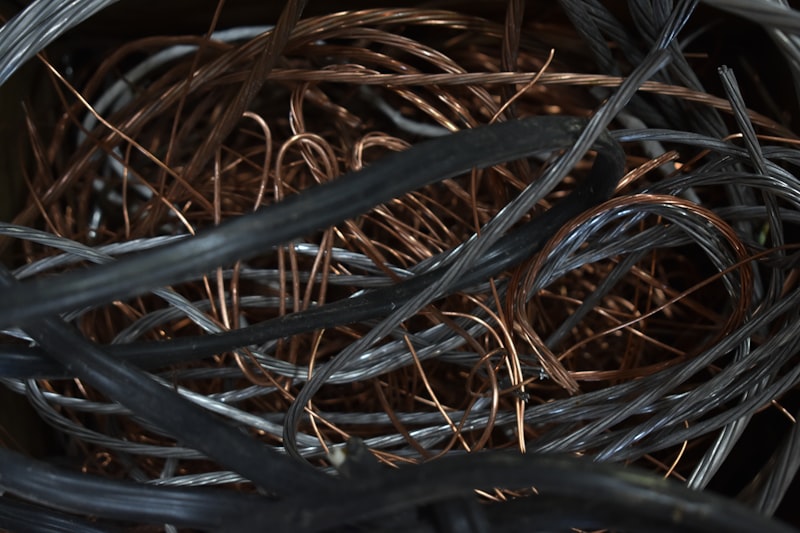
Copper is the metal of electrification, and electrification is the structural demand story of the 2020s. The numbers underneath the headline matter for procurement planning: 83 kg of copper per battery EV versus 23 kg in an internal combustion vehicle (IEA Critical Minerals Outlook; per-unit averages vary by vehicle class). 8–10 tonnes per offshore wind turbine. 4–5× more copper per MW for solar PV vs. gas-fired generation. With LME Cash Copper trading around $10,000/t in early 2026 (as of 2026-03-05, source: LME daily official prices) against a structural mine-supply growth of 1.5–2% per ICSG vs demand growth of 3–4%, the question is not whether the deficit shows up — it's how procurement teams position for it.
EV Copper Intensity: Where 83 kg Goes
The 83 kg per BEV breakdown (per IEA averages): drive motor copper windings (15–20 kg), battery pack busbars and current collectors (20–25 kg), wiring harness (15–20 kg), inverter and DC-DC converter (10–15 kg), charging port and onboard charger (5–10 kg), and miscellaneous body grounding/sensor cabling (5–10 kg). Plug-in hybrids (PHEVs) sit at 50–60 kg, between BEV and ICE. The growth multiple is real: global EV production at 17–22 million units in 2026 (forecaster-dependent; IEA stated-policies) consumes 1.4–1.8 million tonnes of copper annually.
Renewable Energy Infrastructure: The Bigger Volume Number
Solar PV consumes 4–5 t of copper per MW (combined panel wiring, inverter, transformer, and grid connection). Onshore wind: 2.5–3.5 t per MW. Offshore wind: 8–10 t per MW (the higher figure reflects subsea cables and offshore substation work). Battery energy storage systems (BESS): 3–5 t per MWh. Global renewable capacity additions of 500+ GW in 2025 (BloombergNEF) collectively consume 2.5–3.5 million tonnes of copper annually — exceeding EV demand by absolute volume.
Grid Modernisation: The Quiet Demand Driver
Long-haul HVDC transmission, smart-grid distribution upgrades, and substation expansion to accommodate distributed renewable generation all require copper. US grid modernisation investments authorised through the Bipartisan Infrastructure Law and Inflation Reduction Act run into tens of billions of dollars over the decade. European TYNDP (Ten-Year Network Development Plan) projects coordinate cross-border interconnection adding meaningful copper demand. India's UDAY and revised power-grid plans add Asian volume.
Supply-Side Response Has Been Inadequate
Copper mine supply growth has been 1.5–2% annually through 2020–2025 per ICSG. The pipeline of new major projects coming online before 2028 is thin — only a handful of major brownfield expansions in Chile (Codelco's underground transition at El Teniente and Chuquicamata), Peru (Las Bambas expansion considerations), and the DRC (Kamoa-Kakula phase additions, with Ivanhoe-Zijin development). Greenfield projects globally are facing 7–15-year development timelines including permitting and community engagement. The result: a projected cumulative deficit through 2030.
LME Pricing Context
LME Cash Copper averaged ~$9,200/t through 2025 and crossed $10,000/t in Q1 2026 (as of 2026-03-05, source: LME daily official prices). COMEX HG Copper futures trade in parallel; SHFE Copper provides the China-domestic reference with Yangshan Copper Premium signalling Chinese physical-market tightness. The three exchanges' arbitrage relationships move on Chinese state buying signals, inventory levels in LME and COMEX warehouses, and Yangshan premium direction.
Price Outlook H2 2026
Base case: LME Cash in the $9,500–11,000/t range through H2 2026 (range as of 2026-03-05, source: Bare Syndicate internal forecast against ICSG and Wood Mackenzie public commentary). The deficit thesis supports the floor; the upside is capped by demand-elasticity effects (high prices discourage some industrial substitution and demand-deferral). Real upside risks: major supply disruptions (Chilean labour disputes, Peruvian community blockades, DRC political instability), accelerated grid-buildout policy commitments, or surprise Chinese state-buying signals.
Where the EV-Copper Narrative Misfires
- Quoting "the copper price" without LME / COMEX / SHFE specification. The three diverge; the arb is tradeable.
- Extrapolating "20 million EV units in 2026." The 2026 production figure is in the 17–22 million range depending on forecaster — IEA stated-policies vs aggressive scenarios.
- Equating copper intensity across EV models. A heavy battery pickup (Ford F-150 Lightning class) uses meaningfully more copper than a compact BEV (Tesla Model 3 class).
- Stating offshore wind copper intensity at 10 t/MW for shallow-water onshore turbines. The 8–10 t figure includes offshore-specific subsea cabling.
- Assuming solar copper intensity stays at 4–5 t/MW. Module-level power optimisation and string-inverter design changes can shift this figure 10–20% over the decade.
- Stating $65 billion in US grid modernisation as a single-year number. Grid-investment authorisations cover multi-year deployment cycles; check specific BIL and IRA funding tranches by year.
What This Means for Copper Procurement
For copper buyers, the supply-side rigidity is structural — pricing risk is asymmetric to the upside. Multi-year contracts at current spot pricing are defensible against the deficit thesis. For producers (Bare Syndicate's Waziristan operation sits in this camp), the elevated price environment supports near-term operations and the structural deficit through 2030 supports long-term project development. The Paikhel 9.9 Mt resource at the 820-acre operational lease (with four additional exploration leases) is positioned for the supply-demand environment that the next several years will sustain.
Next step: Discuss copper ore and concentrate sourcing from Bare Syndicate's Waziristan operation, with concentrate at 15–25% Cu and run-of-mine ore at 2–10% Cu.
Additional Market Context
The International Copper Study Group (ICSG) Monthly Copper Bulletin tracks mine production, refined output, and the global supply-demand balance. The London Metal Exchange (LME) publishes daily Cash and 3-month settlements for refined copper; COMEX HG Copper provides the US reference; SHFE Copper covers China. Cochilco publishes Chilean production data monthly; Codelco, Freeport-McMoRan, Antofagasta, BHP, and other major operators disclose production quarterly. Fastmarkets MB Copper Concentrate TC Index provides the weekly spot reference; the annual benchmark settlement at Asia Copper Week / CESCO each November sets the term-contract floor for the following year.
For procurement teams sourcing copper, the IEA Critical Minerals Outlook annual report and Wood Mackenzie copper-market service (subscription) provide forecast scenarios through 2030. Yangshan Copper Premium (Mysteel / SMM) signals Chinese physical-market tightness.
Last reviewed: 2026-05-16. LME prices subject to daily movement; copper intensity figures per IEA Critical Minerals Outlook reference values.