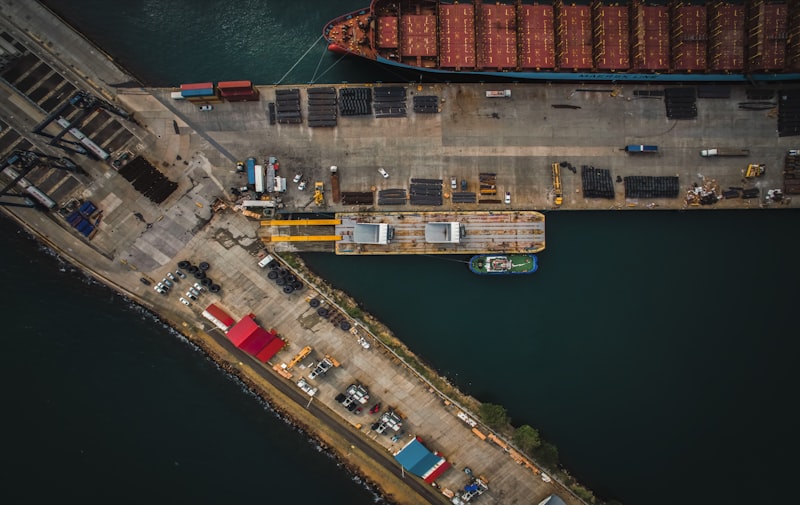
The global metal-ore supply chain in 2026 is structurally more complex than it was in 2020 — the post-pandemic recovery never returned to the pre-2020 status quo. Five specific operational disruptions are simultaneously active in 2026, each requiring distinct trader-side adaptation. This piece names each disruption, the operational impact, and the practical response that traders deploy — the live, here-and-now lens on the market. For the cyclical macro variables behind metal-ore prices see the macro drivers of metal-ore demand, and for the structural 2026–2030 trends see the long-run metal-ore market outlook. None of these disruptions are temporary; they are the new operating baseline.
1. Red Sea Shipping Disruption — Suez Reroute
Yemen Houthi attacks on Red Sea shipping have made the Suez Canal route hazardous for many container and bulk vessels. Major shipping lines (Maersk, MSC, CMA CGM) and many bulk operators reroute via Cape of Good Hope, adding 10–14 days to Asia-Europe transit and increasing freight cost 200–300% on affected routes. The disruption has persisted through 2024–2026 with no clear resolution. Practical trader response: dual-route freight planning (Suez vs Cape), longer planning lead times, force-majeure-aware contract structures.
2. Panama Canal Drought Restrictions
Below-normal rainfall in Panama through 2023–2024 led to Panama Canal Authority restrictions on transit numbers and vessel drafts. 2025 saw partial normalisation; the structural pattern (related to El Niño / climate variability) suggests ongoing restriction risk. Affected commodity flows: Chilean copper concentrate to Asia, Caribbean / US Gulf bulk to Asia, soybean / agricultural commodities. Practical response: Cape Horn rerouting where economic; partial fronthaul / backhaul reconfiguration.
3. MOFCOM Export Licensing
China's Ministry of Commerce export-control regime has expanded across multiple strategic minerals: antimony (Announcement 33 of 2024, effective 2024-09-15), graphite (2023–2024 announcements), gallium and germanium (2023), and various rare-earth-related items. Each regime requires per-shipment licensing, end-user certificates, and dual-use review. Processing windows of 60–90 days are typical. Practical response: source-side diversification to non-Chinese supply, longer-cycle contracting, holding strategic inventory.
4. EU CSRD Supply-Chain Due-Diligence Reporting
The EU Corporate Sustainability Reporting Directive (CSRD, Directive 2022/2464/EU, in force from 2024) requires large EU companies to publish detailed sustainability reports including supply-chain emissions and supply-chain due diligence. Phased application brings smaller companies and non-EU operators (with EU revenue presence) into scope through 2028. The proposed Corporate Sustainability Due Diligence Directive (CSDDD) layers additional supply-chain due-diligence requirements. Practical response: supplier-side documentation packs supporting CSRD reporting; integration of OECD Due Diligence Guidance frameworks.
5. Smelter Surplus + Concentrate Tightness — Counter-Cyclical Logistics
The structural mismatch between global mine supply growth (1.5–2% per ICSG) and smelter capacity growth (faster, particularly in China) has produced concentrate-side tightness with TC/RC compression. The counter-intuitive logistics implication: cargo flows that previously moved on long-term contracts now move spot to chase concentrate, increasing freight volatility and reducing routing predictability. Practical response: flexible counterparty positioning, spot-vessel-charter capability.
Building Resilient Supply Chains
The trader-side framework for navigating these five disruptions:
- Diversification: Multiple suppliers across countries; multiple customers across regions; multiple commodity categories.
- Flexibility: Multi-mode logistics; multi-route freight options; ability to switch destinations on cargo.
- Transparency: Full visibility into supply-chain tiers (1, 2, 3) for regulatory and resilience purposes.
- Buffer capacity: Strategic inventory at port stockpiles or bonded warehouses.
- Documentation discipline: Supplier-side audit packs supporting customer-side CSRD / CSDDD / OECD reporting.
Where Metal-Ore Logistics Reads Go Wrong
- Assuming Red Sea disruption is temporary. The pattern has persisted with no clear resolution; plan for it as baseline.
- Stating Panama Canal is "back to normal." Restrictions have eased but structural pattern continues; freight-route planning should retain dual-option capability.
- Extrapolating MOFCOM licensing relaxation. Regime has been tightening, not loosening, through 2024–2026.
- Treating CSRD as optional for EU-exposed counterparties. Phased application brings broader scope; supplier-side documentation is becoming standard.
- Optimising for one disruption while ignoring others. The five interact; flexibility-positioned across all five is the resilience posture.
- Assuming buffer-inventory cost-of-carry is recoverable. Strategic inventory is insurance — costly, but cheaper than supply failure.
What This Means for Bare Syndicate Customers
Bare Syndicate's trading operations across Pakistani and Afghan production, with established Karachi-port logistics and multi-customer relationship base, provide diversification across origin, route, and customer categories. Documentation packs support customer-side CSRD and OECD reporting requirements.
Next step: Discuss resilient mineral sourcing with Bare Syndicate's Minerals & Mining division — chrome ore, copper, fluorspar, lead-zinc with multi-route logistics and structured contract terms.
Additional Market Context
The standard reference sources for commodity-trade procurement: USGS Mineral Commodity Summaries (annual, mineral-by-mineral chapters), ICSG / ILZSG / ICDA monthly bulletins (commodity-specific), Fastmarkets / Argus / Platts indexed pricing (subscription, with selected free coverage), LME / COMEX / SHFE / GFEX / ICE exchange data (daily settlements), IEA Critical Minerals Outlook (annual scenario analysis), and Wood Mackenzie / CRU / Roskill specialised services (subscription). The OECD Due Diligence Guidance covers supply-chain due diligence across minerals.
For Pakistani and Asian counterparties specifically, Pakistan State Oil, OGRA, OCAC, Hindustan Zinc, Vedanta, and ENRC (Kazakh chromite) provide regional supply-side data. Bilateral US Critical Mineral Arrangements (Japan, UK, EU in negotiation) shape the regulatory framework for cross-border mineral trade.
Last reviewed: 2026-05-16. Supply-chain conditions evolve; verify current status of Red Sea, Panama Canal, and regulatory frameworks against operational sources before contracting.