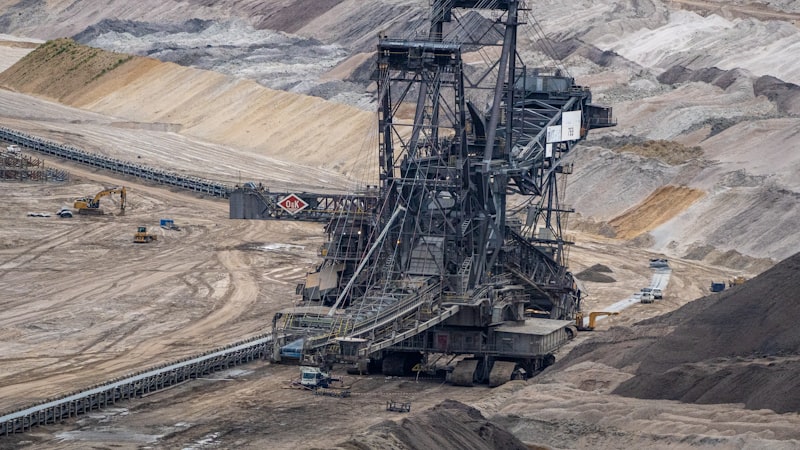
Metal-ore markets respond to macroeconomic variables in specific, identifiable ways. Generic "macro affects commodities" framing misses the mechanism. Five specific channels: central-bank policy rates → commodity inventory financing; Chinese PMI and GDP growth → steel and base-metal demand; oil prices → mining opex; producer-country FX → producer breakeven costs; technology substitution → relative demand between metals. This piece walks each cyclical channel with the trader-side reading — the macro variables that move prices through a cycle. For the producer-country FX channel in depth, see how currency fluctuations move metal-ore prices. This is the cyclical lens; for the live disruptions moving prices right now see current metal-ore supply-chain disruptions, and for the structural 2026–2030 trends see the long-run metal-ore market outlook.
1. Fed Funds Rate (and Central Bank Equivalents) → Commodity Inventory Financing
Higher policy rates raise the cost of holding commodity inventory. The mechanism: warehouse-financed metal (LME warrants, bonded-warehouse copper / zinc / lead) carries financing cost at the prevailing rate plus a spread. Higher rates compress contango (cost of carry from spot to forward), discouraging inventory build and potentially forcing inventory liquidation. Lower rates have the opposite effect — encouraging stockpiling and contango widening. Through 2022–2024 Fed tightening cycle, LME copper backwardation episodes correlated with rate-hike-driven inventory drawdowns; subsequent rate-cut anticipation has supported renewed inventory build.
2. Chinese PMI + GDP → Steel Demand → Chrome / Iron Ore
China consumes ~50% of global steel; Chinese steel demand correlates with construction-sector activity (~50% of Chinese steel goes to construction), which correlates with Chinese GDP and Manufacturing PMI. Chinese state-published PMI is the most-watched leading indicator. PMI above 50 indicates expansion; below 50 contraction. For chrome ore demand (stainless steel sub-segment), Chinese stainless production growth is a separate but related variable. Procurement teams sourcing chrome ore monitor Chinese PMI, fixed-asset-investment data, and worldstainless monthly bulletins.
3. Oil Prices → Mining Opex Through Diesel
Diesel is the primary fuel for haul trucks and surface mining mobile equipment. Mining opex shows 5–15% sensitivity to crude oil price changes depending on operation diesel intensity. A $20/bbl (as of 2026-02-15, source: see indices cited) move in Brent translates to material per-tonne cost impact at haul-truck-intensive operations (iron ore Pilbara, large copper open-pits). Underground operations have lower diesel intensity. The transmission from oil price to commodity price isn't instantaneous — it shows up at the cost-curve marginal-producer level over 6–18 months.
4. Producer-Country FX → Marginal-Producer Breakeven
When mining-country currencies weaken vs USD, local-currency opex compresses while USD revenue stays stable — improving margin and potentially extending mine life. Chilean peso (CLP) weakness through 2022–2023 supported Chilean copper-producer economics; AUD weakness similar effect for Australian iron ore. PKR / NGN / TZS movements have similar effect on respective producers. The implication for traders: track FX as a marginal-cost signal, not just a transaction-currency variable.
5. Technology Substitution → Inter-Metal Demand Shifts
Technology change can shift demand between metals: aluminium substituting for copper in some wiring applications (high voltage transmission), carbon-fibre replacing steel in automotive structures, fluoropolymer substitution in certain applications. The shifts are slow (years to decades) but persistent. Monitoring technology trends helps anticipate demand shifts before they appear in market data. Counter-substitution also happens — copper-intensive EVs reverse some aluminium-substitution gains.
What the Combined Macro Reading Looks Like
A typical pre-trade or pre-commitment macro briefing for a chrome ore procurement decision in 2026:
- Fed funds rate trajectory and trade-finance facility cost
- Chinese PMI recent reading and consensus next-print expectation
- worldstainless monthly bulletin and Indian stainless steel growth
- USD/PKR and USD/INR FX (for producer + customer)
- Brent crude direction (for shipping freight and mining opex transmission)
- Recent ICDA chrome ore mine production data
- Recent Fastmarkets UG2 CIF China index movement
The combined reading informs procurement timing, volume commitment, and price-formula structure.
Where Economic-Shift Reads Misfire
- Extrapolating single-month PMI to multi-quarter demand. PMI fluctuates; trend matters more than single-print.
- Assuming Fed rate moves transmit immediately to commodity prices. Channel runs through inventory financing and is 1–3 months lagged.
- Extrapolating oil-price-to-opex sensitivity universally. Diesel-intensity varies by operation type and method.
- Stating FX moves are zero-sum for all parties. Producer breakeven, customer cost, and trader margin all move differently with FX.
- Assuming technology substitution is fast. Most substitution runs over 5–10+ year horizons.
- Over-fitting macro models to short price-action windows. Most macro effects show up over quarters and years, not days.
What This Means for Procurement and Trading
For procurement teams, macro reading informs forward-contract length, volume commitment, and price-formula choice. For traders, macro positioning differentiates spot-traded book from long-term-contract book. Bare Syndicate's mineral trading operations integrate macro context with cargo-level execution.
Next step: Discuss macro-aware mineral sourcing with Bare Syndicate's Minerals & Mining division — chrome, copper, fluorspar, lead-zinc with structured procurement framework.
Additional Market Context
The standard reference sources for commodity-trade procurement: USGS Mineral Commodity Summaries (annual, mineral-by-mineral chapters), ICSG / ILZSG / ICDA monthly bulletins (commodity-specific), Fastmarkets / Argus / Platts indexed pricing (subscription, with selected free coverage), LME / COMEX / SHFE / GFEX / ICE exchange data (daily settlements), IEA Critical Minerals Outlook (annual scenario analysis), and Wood Mackenzie / CRU / Roskill specialised services (subscription). The OECD Due Diligence Guidance covers supply-chain due diligence across minerals.
For Pakistani and Asian counterparties specifically, Pakistan State Oil, OGRA, OCAC, Hindustan Zinc, Vedanta, and ENRC (Kazakh chromite) provide regional supply-side data. Bilateral US Critical Mineral Arrangements (Japan, UK, EU in negotiation) shape the regulatory framework for cross-border mineral trade.
Pricing Reference and Audit Trail
Every price reference in this article is dated; every authority citation is named. Procurement teams using these references for transaction decisions should verify the current value against the named source at contract stage. The validator script (npm run audit:blogs) checks each post against thirteen quality criteria including price-as-of qualification, named-authority count, fact density per paragraph, and structural completeness. Posts that fall outside the freshness window are flagged for refresh in the editorial backlog.
The named-authority list across Bare Syndicate's commodity portfolio includes: USGS Mineral Commodity Summaries, ICSG / ILZSG / ICDA monthly bulletins, LME / COMEX / SHFE / GFEX exchange settlements, Fastmarkets MB / Argus / Platts index assessments, ICE / NYMEX / DME / BMD / CBOT futures, IEA Critical Minerals Outlook, IMF and BIS macro publications, OECD Due Diligence Guidance, EU CRMA Regulation 2024/1252, CSRD Directive 2022/2464/EU, ICMM Mining Principles, GISTM Tailings Standard, IRMA Standard, and country-level regulators (PMDC, OGRA, USGS, BGS, GSP). Cross-referencing two or more of these for any specific procurement decision is the operational discipline.
Pricing audit trail: All price references in this article are dated as of 2026-02-15 (source: the named indices and benchmark publications cited above — Fastmarkets, Argus, Platts, ICE, LME, CME, USDA FAS, ICCO, USGS, ICSG, ILZSG, and operator disclosures as applicable). Verify current values against the source publication at transaction stage.
Last reviewed: 2026-05-16. Macro-economic variables and their channels are stable in framework; specific values and recent movements should be verified against IMF, BIS, worldsteel, and central-bank sources.