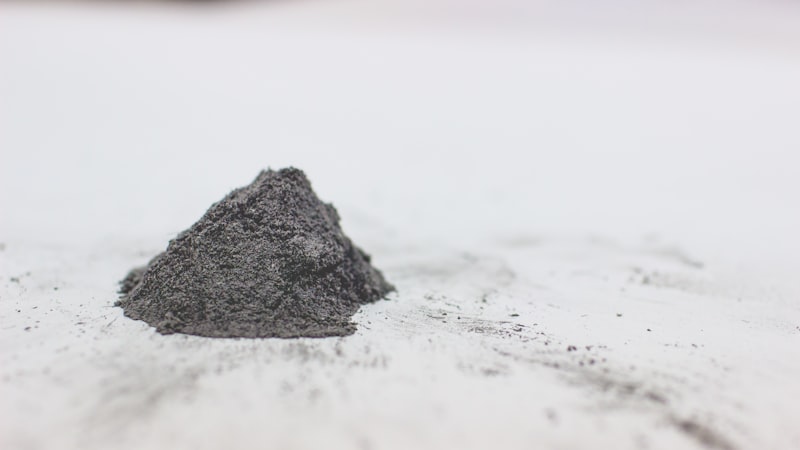
Mud companies routinely buy their two API 13A minerals as unrelated line items — barite from one trader, bentonite from another, two certification trails, two freight files, two quality disputes waiting to happen. Yet one standard governs both: API Specification 13A, Drilling Fluids Materials, covers barite in Section 7 and bentonite in Section 9, and the two certs end up stapled into the same mud programme at the same rig. Pakistan happens to produce both minerals into the same export chain — Khuzdar barite and Khushab sodium bentonite — which is why our drilling-minerals enquiries increasingly arrive, and ship, as one consolidated programme. This guide covers both specs side by side, with the deep per-mineral detail in our barite decoder and bentonite procurement guide.
What does API 13A require for drilling-mud barite and bentonite?
API Specification 13A sets both gates: Section 7 barite must reach specific gravity 4.20 or higher — it is the weighting agent that controls mud density — while Section 9 bentonite must swell to 24+ mL per 2 g, hold fluid loss under 15 mL in the 30-minute test, and yield at least 16 m³ of acceptable mud per tonne.
| Mineral | API 13A section | Job in the fluid | Key gates |
|---|---|---|---|
| Barite (BaSO₄) | Section 7 | Weighting agent — mud density control | SG ≥ 4.20; 200-mesh powder for field use |
| Bentonite (Na-montmorillonite) | Section 9 | Viscosifier and fluid-loss control | Swell 24+ mL/2g; filtrate < 15 mL; yield ≥ 16 m³/MT |
Two Jobs, One Fluid
The two minerals do opposite work in the same barrel. Bentonite builds the fluid itself — viscosity to carry cuttings, and the filtration control that the Section 9 test measures directly by capping filtrate at 15 mL. Barite then loads that fluid with density, which is the entire reason its gate is specific gravity: at SG 4.20-plus, fewer tonnes achieve the target mud weight. The mud engineer balances the two continuously — which is why the certificates travel together on the drilling contractor's side (the IADC's mud-system literature treats them as one materials programme) and why a supplier who can warrant both specs on one documentation pack removes a reconciliation headache the two-vendor route builds in.
Can calcium bentonite make API drilling grade?
Yes — by soda activation. Natural sodium bentonite of the Wyoming type meets Section 9 as mined, but calcium bentonite can be treated with soda ash (Na₂CO₃), ion-exchanging Ca²⁺ for Na⁺ and upgrading the swelling index to API 13A territory where natural sodium clay is unavailable. Our catalogue runs both lanes: natural Na-bentonite from Khushab District, whose swelling clears the 24 mL/2g gate natively, and a soda-activated drilling grade certified post-activation. The distinction belongs on the certificate — a buyer should know which lane a cargo comes from, because activation quality is itself a spec parameter, as covered in the bentonite guide's activation section.
One Origin, Two Certs: the Pakistani Pairing
Khuzdar District in Balochistan is Pakistan's dominant barite-producing district per the Geological Survey of Pakistan, and our drilling-grade barite runs from SG 4.2 raw lump (BaSO₄ ≥ 92%, 0–300 mm, for grinding plants) to 200-mesh API 13A powder ready for the mud plant. Khushab District in Punjab supplies the natural sodium bentonite lane. Both converge on Karachi, which is the practical argument for programme buying: one origin chain, one assay regime, consolidated container loads from Karachi instead of two part-shipments from two continents — and one counterparty warranting both API sections.
Where Mud-Mineral Procurement Trips Up
- Buying "SG 4.2 barite" without the API 13A certification. Meeting a density number and holding the certificate are different claims — the spec also gates particle size and soluble alkaline-earth metals, and only the cert covers them.
- Calling barite a lubricant. It is a weighting agent; lubricity comes from other additives. Memos that misname the function tend to mis-spec the product.
- Comparing bentonite offers by the tonne. The economics number is yield — cubic metres of acceptable mud per tonne (Section 9 floor: 16). A cheaper clay at lower yield is dearer mud.
- Assuming Chinese origin means highest quality. Chinese barite export quality has varied widely as easier deposits depleted; Indian, Moroccan, and Pakistani product is competitive at SG 4.2 — certify the cargo, not the flag.
- Shipping the pair separately. Two freight files to the same mud plant is paid-for inefficiency when both minerals load at the same port.
- Grade-name confusion. Drilling barite is not paint-grade or pharma BaSO₄; drilling bentonite is not foundry or pelletizing clay. Same mineral names, different specs, different prices.
Next step: Review the barite drilling grades and bentonite grade range, or request a combined programme indication — both minerals, one documentation pack, API 13A sections 7 and 9 warranted on the face of the offer. The Minerals & Mining division lists the full portfolio.
Additional Market Context
The working references: API Specification 13A itself (American Petroleum Institute) for both sections; the IADC for mud-system practice; USGS Mineral Commodity Summaries 2026 — the barite and clays chapters — for the supply baseline (global barite ~7–8 Mt/yr, bentonite within a ~17–19 Mt/yr clays complex); the Geological Survey of Pakistan for the Khuzdar and Khushab district geology; and the Argus and Fastmarkets industrial-minerals assessments for price direction. No price levels are quoted here — drilling-minerals pricing turns on SG, certification, form, and freight, so ask for an indication against your specification.
Last reviewed: 2026-08-18. Specification gates per API 13A as summarised in our source briefs and product pages; this guide quotes no prices and needs no freshness cycle.