A steel foundry that orders chromite facing sand on the phrase "AFS grade" alone — without the grain fineness number (GFN 45–60 for foundry chromite) — is gambling the casting. Too fine, and permeability collapses so mould gas can't escape, giving blows and pinholes; too coarse, and the surface comes back rough and metal penetrates between the grains. Chromite is the moulding sand foundries reach for when silica can't take the heat — but its value is only realised when the AFS grain fineness is matched to the casting section. This guide walks the spec sheet an engineer should hand to a sand supplier before the next chromite order.
The 60-Second Read
Chromite (FeCr₂O₄) foundry sand is a high-refractoriness, high-thermal-conductivity moulding and facing sand used for steel and heavy-section castings, where its chilling effect drives directional solidification and its low thermal expansion resists veining and scabbing. It is graded by the American Foundry Society (AFS) Grain Fineness Number (GFN) — a higher number means a finer sand — typically 45–60 for foundry chromite, at Cr₂O₃ 46%+ with a sub-angular grain. Bare Syndicate's chrome ore foundry grade sits in that band. The engineering question is never "is it chromite" — it is which GFN the section needs, because fineness trades surface finish against gas escape.
What AFS Grain Fineness Number Actually Measures
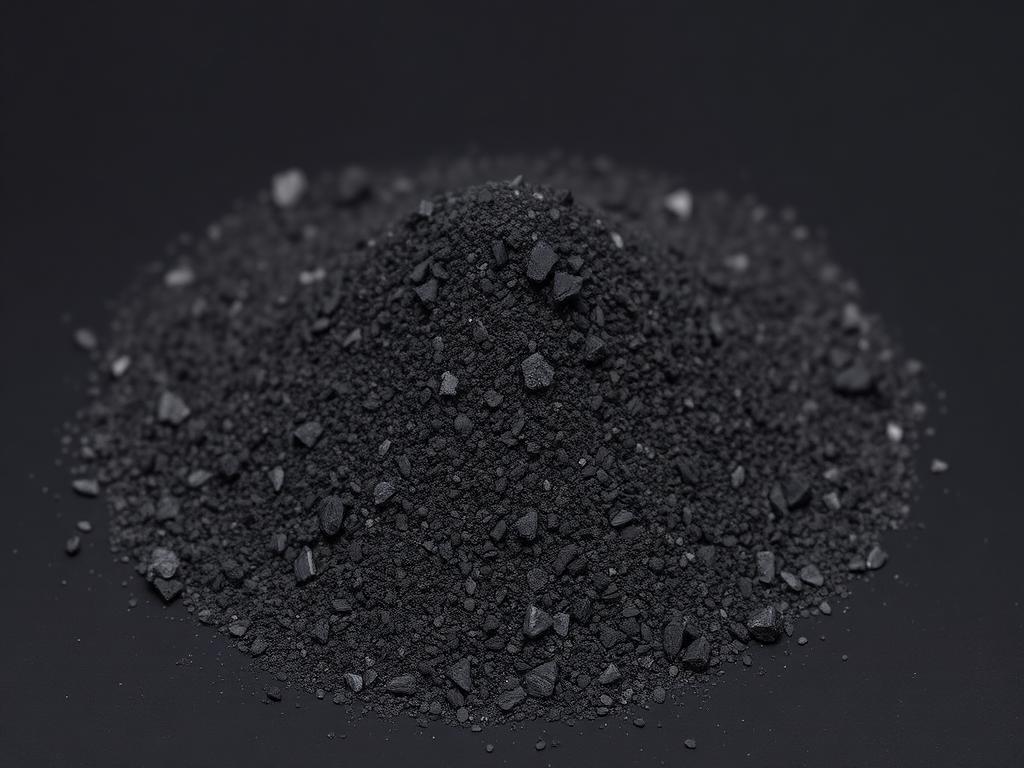
The AFS Grain Fineness Number is a weighted-average index of grain size from a standard sieve analysis (the AFS 1105 / ASTM screen series), reported as a single number: the finer the sand, the higher the GFN. It is the one figure that gates two casting-critical properties at once — permeability (how readily mould gas vents) and surface finish (how smooth the casting skin comes out). A chromite lot certified only as "foundry grade" without a GFN and its screen distribution is not specified; two sands both called "foundry chromite" at GFN 48 and GFN 58 behave differently in the mould.
Why Chromite, Not Silica, for Steel and Heavy Sections
Chromite earns its premium over silica on four properties that matter most on steel and thick sections. Its refractoriness is high, with sinter onset around 1850 °C, so it resists fusion under a steel pour where silica would burn on. Its high thermal conductivity produces a chilling (end-freezing) effect that promotes directional solidification and sounder heavy sections. Its thermal expansion is low and uniform — it avoids the 573 °C quartz inversion that drives silica's veining, scabbing, and rat-tail defects. And its grain resists metal penetration and burn-on. That is why chromite is run as a facing or chill sand — a thin layer against the pattern, backed by a cheaper silica system sand — and in cores for demanding sections, rather than as the whole mould.
Matching AFS Fineness to the Casting
Fineness is a trade-off, not a "higher is better" dial. Coarser sand (lower GFN, around 45–50) vents gas and suits heavy sections; finer sand (higher GFN, 55–60) gives a better skin but chokes permeability. The working bands:
| AFS GFN | Character | Best for | Watch |
|---|---|---|---|
| 45–50 | Coarser, high permeability | Heavy-section steel, thick walls, gas-prone alloys | Rougher surface finish |
| 50–55 | Mid-range balance | General steel and alloy castings | The default starting point |
| 55–60 | Finer, better finish | Detailed or thinner-walled sections needing a smooth skin | Lower permeability — verify gas escape |
The rule of thumb: start at GFN 50–55 for general steel work, drop toward 45 as the section thickens and gas load rises, and move toward 60 only when surface finish is the binding constraint and the venting can carry it.
The Specs That Gate a Chromite Sand Lot
Beyond GFN, five lines decide whether a chromite lot performs: Cr₂O₃ content at 46%+ (higher chromite fraction, higher refractoriness); grain shape stated as sub-angular (rounded grains flow and pack differently); SiO₂ kept low (free silica undercuts the refractoriness you paid for); moisture and acid demand within the binder system's tolerance; and the full screen distribution behind the single GFN number, because two sands can share a GFN and differ in spread. Chromite's specific gravity (~4.4–4.6) and bulk density (~2.7–2.8 t/m³) also matter for weigh-batched sand systems calibrated on silica.
Where Chromite Foundry-Sand Procurement Trips Up
- Buying on "AFS grade" without the GFN number. "Foundry chromite" spans GFN 45–60; the number, plus the screen distribution, is the spec.
- Confusing chrome ore grades with foundry sand. Metallurgical and chemical chromite are specified for the smelter and chemical plant — different requirements. See our chrome ore grades buyer guide for that distinction.
- Citing the Cr:Fe ratio. Cr:Fe governs ferrochrome yield at the smelter — it is irrelevant to how sand performs in a mould. Foundry buyers specify GFN, grain shape, Cr₂O₃, and SiO₂.
- Running too fine. A GFN-58 sand on a heavy gas-prone section chokes permeability and gives blows — the most common chromite mistake.
- Treating chromite as a 1:1 silica swap. Its density and thermal behaviour differ; the sand system's ratios and venting need re-checking, not copy-pasting from a silica recipe.
- Ignoring the binder. Chromite is the aggregate; the bond is separate — bentonite in green-sand systems (see our foundry bentonite guide), or resin in no-bake.
What to Verify Before Signing
- AFS GFN + screen distribution — the number and the sieve breakdown behind it, not just "foundry grade".
- Cr₂O₃ and SiO₂ — Cr₂O₃ 46%+, low free silica, on an independent assay.
- Grain shape — sub-angular, stated explicitly.
- Moisture and acid demand — within your green-sand or no-bake system's tolerance.
- Independent assay — third-party lab results (SGS, Bureau Veritas) on the shipped lot.
- Application match — GFN chosen for the section thickness and gas load, not a house default.
Next step: Review grade specifications and origin documentation for chrome ore (metallurgical, refractory, and foundry grades), or request a delivered-cost indication with the AFS GFN, Cr₂O₃, and grain-shape figures spelled out for your casting. The full portfolio sits under the Minerals & Mining division, and our chromite applications guide covers the metallurgical and refractory end-uses alongside foundry sand.
Additional Context
The foundational references for chromite foundry sand are the American Foundry Society (AFS Mold & Core Test Handbook) for the grain-fineness method and sand-testing standards, the USGS Mineral Commodity Summaries (annual chromium chapter) and the International Chromium Development Association (ICDA) for chromite supply and demand, and worldstainless for the stainless-steel demand backdrop. Independent inspection by SGS or Bureau Veritas at origin is the contractual default for any chromite sand lot of meaningful tonnage.
Last reviewed: 2026-07-03. Grain-fineness bands and chromite sand properties are sourced to the American Foundry Society and chromite foundry-sand literature; verify the AFS GFN, screen distribution, and Cr₂O₃ against an independent assay before contract execution.