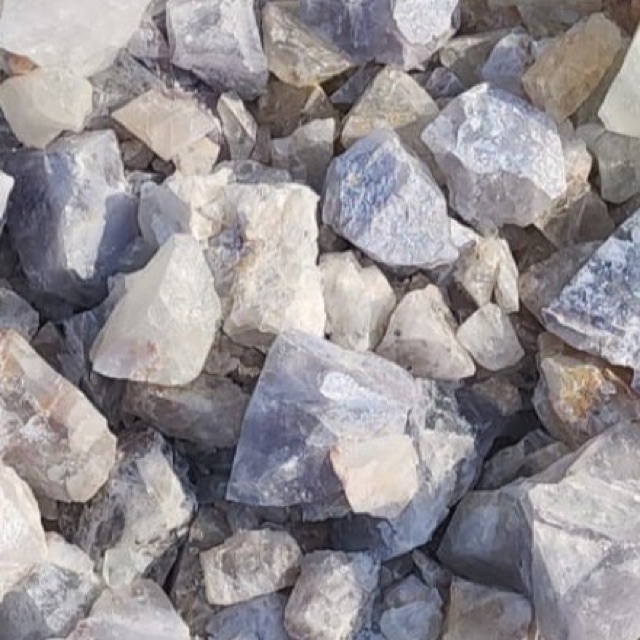
Fluorspar
Origin: Kandahar, Afghanistan & Pakistan
CaF₂: 35–85% | Metallurgical, Ceramic & Cement Grades
Available grades & specifications+
Ceramic Grade
CaF₂: 85–95%, low Fe₂O₃
Glass, Enamel, Ceramic manufacturing
Cement Grade
CaF₂: 35–60%, SiO₂ < 15%
Clinker mineralizer, Cement kilns, Foundry flux
Grade comparison +
| Property | Metallurgical Grade | Ceramic Grade | Cement Grade |
|---|---|---|---|
| CaF₂ Content | 70–85% | 85–95% | 35–60% |
| SiO₂ | < 5% | Low (controlled) | < 15% |
| Fe₂O₃ | Standard | Low (controlled for glaze colour) | Variable |
| Primary Use | Steel flux, ferrochrome, iron smelting | Glass, enamel, ceramic manufacturing | Clinker mineralizer, cement kilns, foundry flux |
| Typical Sizing | Lump / 0–80 mm | 0–200 mesh | 0–30 mm / 0–50 mm |
| Typical Buyer | Steelmakers, ferro-alloy producers | Glass and ceramic manufacturers | Cement plants, foundries |
Origin & supply chain +
Sourced from Kandahar, Afghanistan
Bare Syndicate's 62 km² fluorspar lease in Kandahar province lies within Afghanistan's western fluorite belt — a series of high-temperature hydrothermal vein systems that have been mapped and sampled by both Soviet-era and modern geological surveys. Cement-grade material is selectively mined and crushed at the pit, then road-hauled via the Spin Boldak corridor into Pakistan and onward to Karachi port. Our integrated logistics model — own trucks at origin, bonded warehousing at the border, and consolidated container loading in Karachi — gives buyers in the GCC, India, Bangladesh, and East Africa a reliable Afghan-origin supply with full Certificate of Origin documentation under the SAFTA and APTA frameworks.
FAQ +
What is cement-grade fluorspar used for?
Cement-grade fluorspar (CaF₂ 35–60%) acts as a mineralizer in clinker production, lowering the burning temperature of the kiln by 50–100°C, improving fuel efficiency, and accelerating C₃S formation. It is also used as a low-cost flux in foundries and iron-smelting where high purity is not required.
How is cement grade different from acid grade fluorspar?
Cement grade has CaF₂ between 35–60% and tolerates higher SiO₂ and CaCO₃, making it economical for kiln mineralization. Acid grade requires CaF₂ ≥97% with ultra-low SiO₂/CaCO₃/As/P, used as feedstock for hydrofluoric acid and the fluorochemical value chain.
Where does Bare Syndicate source cement-grade fluorspar?
From our 62 km² mining lease in Kandahar, Afghanistan, where vein-hosted fluorite deposits yield consistent run-of-mine material crushed to lump and 0–30 mm sizes for cement and foundry buyers.
What are typical shipment terms?
We ship FOB Karachi or CIF/CFR to destination ports, in 25 MT containers or bulk cargoes. All shipments include SGS or CIQ assays for CaF₂, SiO₂, CaCO₃, and moisture content.
How does cement-grade fluorspar reduce CO₂ emissions in cement plants?
By acting as a mineralizer, it lowers clinkering temperature and improves alite formation, allowing cement producers to reduce kiln fuel consumption by 3–8% — directly translating to lower scope-1 CO₂ emissions per tonne of clinker.