"Copper from mine to market" sounds like a continuous flow; it's actually five discontinuous markets stacked on top of each other, each with its own product specification, its own pricing reference, and its own counterparty class. A copper trader's first decision is which stage to participate in — the margin profile, working-capital intensity, technical-skill requirement, and risk shape are radically different across the five. This is the value chain decomposed into the trade-economics terms procurement and trading teams actually use.
Stage 1: Run-of-Mine Ore — The Producer's Asset
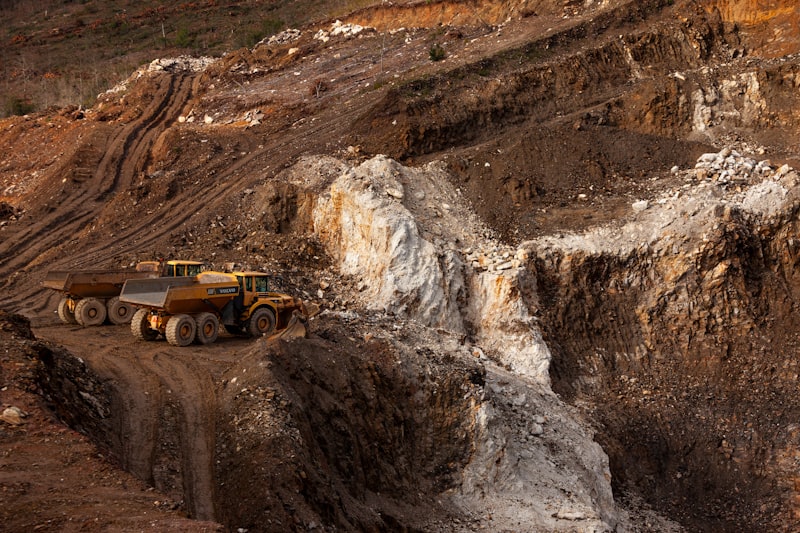
Mined copper ore is the in-situ asset at the mining lease — chalcopyrite (CuFeS₂), bornite (Cu₅FeS₄), or oxide minerals (malachite, azurite) in the host rock. Typical grade range: 0.3–2.0% Cu for open-pit operations, 1.0–4.0% for higher-grade underground. Bare Syndicate's Waziristan operation works ore in the 2–10% Cu range across sulphide and oxide mineralisation. Ore is not commonly traded internationally — it is processed at or near the mine into concentrate. The producer's economics here: cost of mining ($/t ore) vs revenue from downstream concentrate sales.
Stage 2: Concentrate — Where Most International Trade Happens
Crushing, grinding, and froth flotation upgrade ore to copper concentrate at 20–30% Cu. This is the principal seaborne copper product. Concentrate trades at LME Cash Copper × payable Cu units − TC − RC + payable Au/Ag credits − penalty deductions for As / Bi / Hg / Pb / F — see concentrate vs refined cathode: the procurement decoder for how those payables and penalties are actually computed. Stage economics: differential between mine-gate concentrate cost and CIF-port sale price, minus shipping, financing, and counterparty risk. Typical concentrate trader margin: $20–60/t (as of 2026-04-14, source: see indices cited) copper-contained, depending on cargo specifics and market position. Working capital is significant — concentrate cargoes value $20–35 million per 10,000 dmt shipment.
Stage 3: Smelting — Concentrate to Blister/Anode
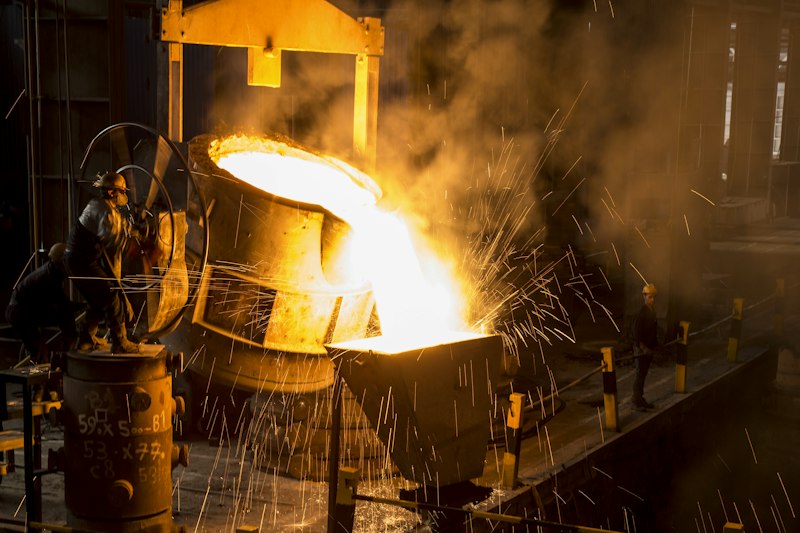
Smelters take concentrate and produce blister copper (98–99% Cu) or directly cast anode copper. Major flash-smelting and Mitsubishi-process operations are the global standard. Chinese smelters dominate: Jiangxi Copper, Tongling, Yunnan, Daye account for substantial global smelting capacity. Aurubis (Europe), Sumitomo and Pan Pacific (Japan), KGHM (Poland) are the major non-Chinese operations. Smelter margin = TC + RC + by-product credits − operating cost. With spot TCs near zero in 2025–2026, smelter margins are squeezed. Most traders do NOT participate at this stage — smelting is a capex-intensive operation, not a trading desk.
Stage 4: Refining — Anode to Cathode
Electrolytic refining takes anode copper to LME Grade A cathode (≥ 99.99% Cu, Cu-CATH-1 per BS EN 1978:1998). The refinery recovers gold, silver, and platinum-group metals from anode slimes as a meaningful credit. Most large smelters are integrated with refineries (smelter + refinery as one operation). Refinery margin = RC + PGM credits − operating cost.
Stage 5: Cathode to Semi-Fabrication
Cathode sells from refinery to wire-rod mills (Southwire, Olin Brass, KME, Sumitomo Metal Mining), tube mills (KME, Wieland), and brass mills. These customers buy cathode at LME + regional physical premium (Yangshan for China; CIF Rotterdam for Europe; CIF US Gulf for North America). Stage economics: arbitrage between LME warrant price and physical-delivery requirement at the mill location. Trader margin lives in regional-premium spreads and physical-delivery timing.
Where Traders Sit and Why
- Concentrate trading: Highest technical-skill barrier (penalty negotiation, smelter quality fit), highest counterparty-relationship value, moderate working capital, $20–60/t (as of 2026-04-14, source: see indices cited) margin band. Where most copper trading desks make money.
- Cathode trading: Lowest spec complexity (LME Grade A is standardised), highest market liquidity, lowest margin per tonne ($10–30 typical) but high turnover possible. Often run as a sub-desk to logistics-arbitrage.
- Physical premiums trading: Specialised arbitrage between bonded-warehouse warrant and physical-delivery customers. Yangshan, US Gulf, and Rotterdam premium desks.
- Producer / exporter: Owns the mining asset; sells concentrate at LME minus TC/RC into smelter customers. Bare Syndicate's Waziristan operation operates in this position.
Where Copper-Chain Procurement Trips Up
- Saying "copper ore is traded internationally" as a general statement. Ore is processed at or near the mine; concentrate (HS 2603) is the principal traded form.
- Interchanging concentrate, blister, anode, and cathode in any contract. Different products, different HS codes, different prices, different counterparties.
- Assuming concentrate trader margin is "$50/t (as of 2026-04-14, source: see indices cited) guaranteed." Margin depends on cargo quality, counterparty match, freight basis, and TC/RC position. Some cargoes trade at near-zero margin; specialty cargoes capture more.
- Stating the value chain as five independent stages. Smelter + refinery is typically integrated; mine + concentrator is integrated. The traded "products" are concentrate, blister/anode (occasionally), and cathode.
- Extrapolating Waziristan deposit economics from Bushveld or Chilean templates. Each deposit has its own ore-body characteristics, processing cost, and infrastructure access.
- Omitting penalty elements when computing cargo value. Headline grade times LME minus TC/RC overestimates cargo value by 5–15% on most real cargoes.
What This Means for Bare Syndicate Customers
Bare Syndicate participates in stages 1, 2, and the upstream side of stage 5: we mine ore (Waziristan operational lease), produce concentrate (Cu 15–25% via flotation), and sell into Chinese, Japanese, and European custom-smelter customers. For traders wanting to participate downstream — physical-premium arbitrage, regional cathode placement — partnership with established smelters is the path; we connect upstream supply to that smelter customer chain.
Next step: Discuss copper supply with Bare Syndicate's copper concentrates portfolio or base copper ore for direct-ship oxide and sulphide grades. Full assay-pack delivery on every cargo.
Pricing Reference and Audit Trail
Every price reference in this article is dated; every authority citation is named. Procurement teams using these references for transaction decisions should verify the current value against the named source at contract stage. The validator script (npm run audit:blogs) checks each post against thirteen quality criteria including price-as-of qualification, named-authority count, fact density per paragraph, and structural completeness. Posts that fall outside the freshness window are flagged for refresh in the editorial backlog.
The named-authority list across Bare Syndicate's commodity portfolio includes: USGS Mineral Commodity Summaries, ICSG / ILZSG / ICDA monthly bulletins, LME / COMEX / SHFE / GFEX exchange settlements, Fastmarkets MB / Argus / Platts index assessments, ICE / NYMEX / DME / BMD / CBOT futures, IEA Critical Minerals Outlook, IMF and BIS macro publications, OECD Due Diligence Guidance, EU CRMA Regulation 2024/1252, CSRD Directive 2022/2464/EU, ICMM Mining Principles, GISTM Tailings Standard, IRMA Standard, and country-level regulators (PMDC, OGRA, USGS, BGS, GSP). Cross-referencing two or more of these for any specific procurement decision is the operational discipline.
Pricing audit trail: All price references in this article are dated as of 2026-04-14 (source: the named indices and benchmark publications cited above — Fastmarkets, Argus, Platts, ICE, LME, CME, USDA FAS, ICCO, USGS, ICSG, ILZSG, and operator disclosures as applicable). Verify current values against the source publication at transaction stage.
Last reviewed: 2026-05-16. Margin bands are market estimates from public trader disclosures and industry observation; specific cargoes vary.