A procurement team signing an antimony concentrate LOI on headline Sb grade alone can lose the cargo twice — once to an arsenic penalty that was never named in the contract, and again if the counterparty cannot produce a valid export licence under China's Announcement No. 33. Antimony is a critical mineral in the US, EU, UK, Japan, Australia, and India, and with China controlling ~55% of mine supply and 60–80% of trioxide refining (USGS Mineral Commodity Summaries 2026), spec and licence discipline now decides whether a cargo clears at all. This guide walks the spec sheet to hand your assay lab, smelter, and compliance desk before signing Pakistani-origin antimony.
The 60-Second Read
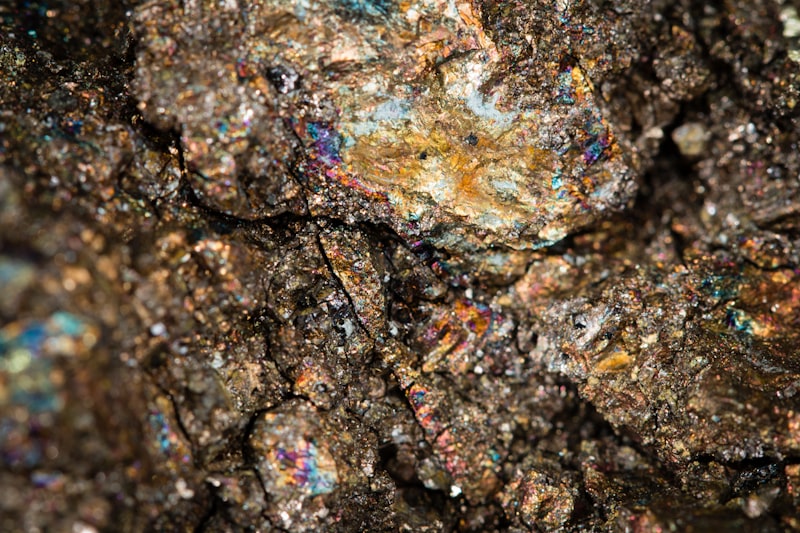
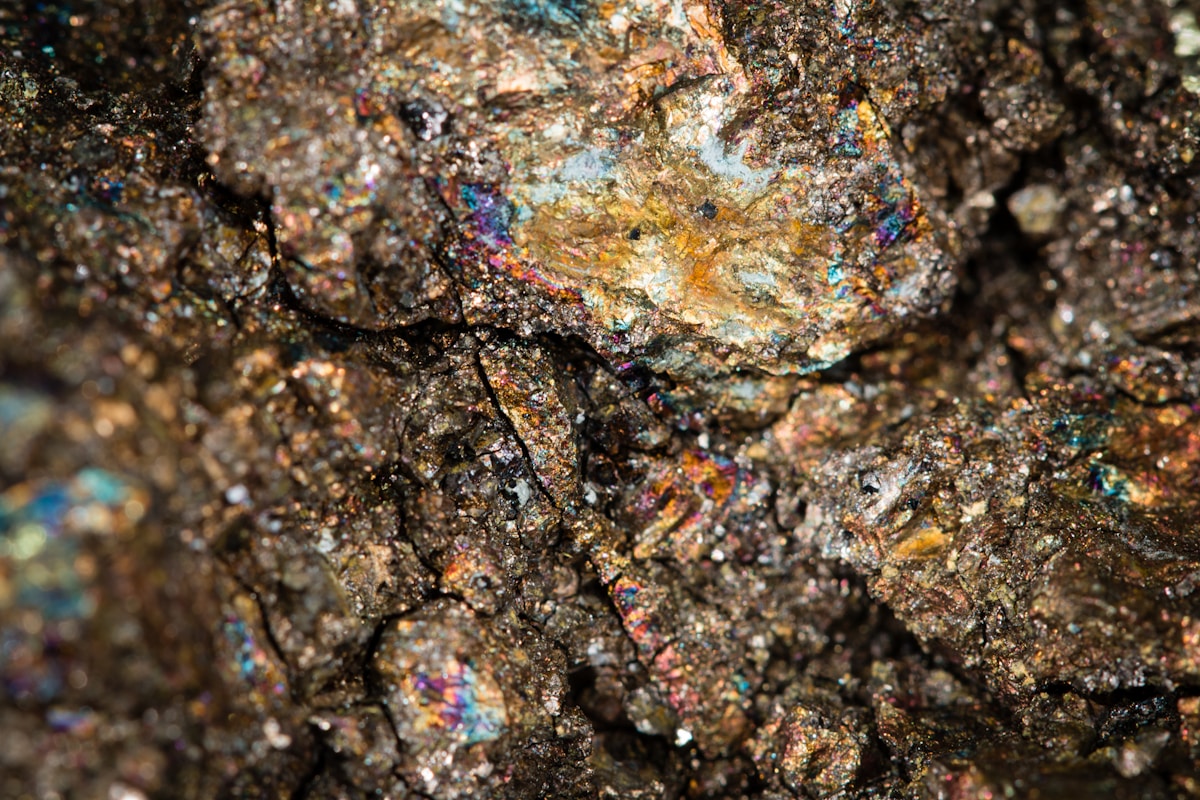
Antimony trades as ore (stibnite, Sb₂S₃), beneficiated concentrate, refined metal/ingot, and trioxide (Sb₂O₃) — four products with different specs, HS codes, and prices. Bare Syndicate offers antimony ore at Sb 5–35% and antimony concentrates at Sb 35–55% (Standard 35–45%, High Grade 45–55%); premium pricing typically starts at 50% Sb (Core Consultants Group, 2025). There is no LME antimony contract — the Western benchmark is Fastmarkets MB Antimony 99.65% Rotterdam, with Asian Metal and SHMET as the China references. The three questions that decide a cargo: what is the arsenic level, is the grade tier real, and can the seller export it legally.
Antimony Grade Tiers: From 5% Ore to 55% Concentrate
Antimony is tiered by contained Sb, and the marketability cliff is sharp. Per Core Consultants Group (2025): low-grade material runs 5–25% Sb (scarcely marketable below 25%), mid-grade 25–40% Sb (needs concentration), and high-grade 45–60% Sb (premium band, with premium pricing typically starting at 50%). Bare Syndicate's ore at 5–35% Sb suits buyers running their own beneficiation or direct blast-furnace feed; the concentrate splits into Standard 35–45% and High Grade 45–55% tiers. The 55%+ premium tier is not commercially offered from Pakistani ore — published results above that level are pilot/lab findings, not production, which matters when a counterparty quotes 60%+ "concentrate."
The Penalty Elements That Move Antimony Cargo Value
Headline Sb is one line on the assay; the penalty elements are where margin leaks. Per Core Consultants Group (2025), the four that smelters price:
- Arsenic (As) — smelters typically reject above 0.5% As with penalties applied; premium buyers prefer below 0.3%. This is the single most common reason a stibnite cargo gets discounted or refused.
- Lead (Pb) — must stay below 0.4–0.5% for downstream flame-retardant chemistry (antimony's largest end-use at roughly 50–60% of demand).
- Cadmium and bismuth (Cd, Bi) — premium buyers prefer below 0.01% each.
- Sulphur (S) — sulphide ores with 20%+ S are far easier to smelt; premium specs require 20%+, which native stibnite (Sb₂S₃) generally satisfies.
None of these thresholds are "standard" until written into the contract with a per-unit penalty rate — a 0.3% versus 0.5% arsenic ceiling on a mid-grade concentrate is a real settlement difference.
Ore, Metal, or Trioxide? Don't Conflate the Three
The most expensive category error in antimony is quoting one form's price or spec against another's. Antimony ore and concentrate ship under HS 2617.10; unwrought metal/ingot under 8110.10; trioxide under 2825.80 (WCO Harmonized System 2022). Trioxide (Sb₂O₃, CAS 1309-64-4) is the dominant traded downstream form at Sb₂O₃ ≥ 99.5%, As ≤ 0.10% — a refined chemical, not an ore. Comparing a Pakistani stibnite concentrate to a "99.65% antimony" Rotterdam benchmark compares an ore to a refined ingot — different product, customs code, and price basis.
Export-Licence Exposure: China's Announcement No. 33
China's Ministry of Commerce imposed export licensing on antimony effective 2024-09-15 (Announcement No. 33 of 2024), and the EU Critical Raw Materials Act (Regulation 2024/1252) lists antimony as strategic — the backdrop pushing buyers toward non-Chinese supply. For any cargo touching Chinese-origin or Chinese-refined material, confirm a valid export licence exists before the delivery window, not after. This is why Pakistani-origin stibnite is on more buyers' maps in 2026 — a shift covered in our analysis of the 2026 antimony supply-chain crisis and the non-Chinese supply picture.
Pakistani Antimony Origin: Krinj-Chitral and Balochistan
Pakistan's documented antimony sits in two provinces. The Krinj-Chitral belt (Khyber Pakhtunkhwa) hosts stibnite in shear-zone veins at ~19% Sb head grade (USGS Professional Paper 0716g); Balochistan adds high-grade Kharan and low-grade fault-bound Qilla Abdullah mineralisation. Published beneficiation studies show what these ores can reach: Krinj pilot-plant flotation upgraded ~19% Sb head ore to 62% Sb concentrate at 95% recovery, and Qilla Abdullah laboratory flotation reached 65.12% Sb at 85.79% recovery. Those are research demonstrations, not commercial tonnages; national recoverable reserves are indicatively ~86,000 tonnes, but Pakistan's official statistics are inconsistently updated — treat any reserve figure as directional and demand a Geological Survey of Pakistan or USGS citation.
Where Antimony Procurement Trips Up
- Conflating ore, metal, and trioxide. Different HS codes (2617.10 / 8110.10 / 2825.80), specs, and prices — quoting across them is the classic overpay.
- Omitting the arsenic penalty. Above 0.5% As, most smelters penalise or reject; if the threshold and per-unit rate are not in the contract, the buyer wears the settlement surprise.
- Quoting "LME antimony." There is no LME contract. The references are Fastmarkets MB Rotterdam (Western) and Asian Metal / SHMET (China-domestic).
- Assuming 55%+ concentrate from Pakistani ore. The 62% and 65% figures are pilot/lab results; commercial Pakistani concentrate tops out around 55% Sb.
- Skipping export-licence verification. For any Chinese-touched material, confirm Announcement No. 33 licence status before the delivery window.
- Citing reserve tonnages without a source. Pakistan's national antimony totals are indicative; anchor any figure to USGS or the Geological Survey of Pakistan.
What to Verify Before Signing
- Grade tier — contained Sb%, stated as ore (5–35%) or concentrate tier (Standard 35–45%, High Grade 45–55%), not a vague "high-grade" label.
- Penalty thresholds — As, Pb, Cd, Bi, and minimum S written in with per-unit penalty rates, not "standard smelter terms."
- Assay protocol — named inspection company (SGS, Alfred H Knight, Bureau Veritas), origin and destination samples, umpire-assay clause.
- Pricing reference — Fastmarkets MB Rotterdam or Asian Metal with a named pricing window; never "LME antimony."
- Export-licence status — Announcement No. 33 compliance for any Chinese-origin or Chinese-refined content.
- HS classification and Incoterms 2020 — 2617.10 for ore/concentrate, with FOB Karachi or CIF discharge port stated.
Next step: Review grade specifications and origin documentation for antimony ore and antimony concentrates, or request a delivered-cost indication with the Sb tier, penalty thresholds, and licence position spelled out before LOI execution. The broader Minerals & Mining division lists the full portfolio, and our Pakistani galena and sphalerite spec guide applies the same format to base-metal concentrates.
Additional Market Context
The foundational data sources for antimony procurement are the USGS Mineral Commodity Summaries (annual antimony chapter), the British Geological Survey World Mineral Production dataset, the EU Critical Raw Materials Act (Regulation 2024/1252), and Core Consultants Group (2025) for grade and penalty benchmarks. Price references are Fastmarkets MB (Rotterdam) and Asian Metal / SHMET (China); independent inspection by SGS, Alfred H Knight, or Bureau Veritas at origin and destination is the contractual default.
Last reviewed: 2026-07-02. Grade tiers and penalty thresholds are sourced to Core Consultants Group (2025) and USGS MCS 2026; verify current benchmark assessments and counterparty export-licence status against the named sources before contract execution.